Beyond the Classroom: A Practical Review of 2nd Grade Rocks
As an embroidery designer who stitches for real clients, from Etsy shops to local boutiques, I’m always evaluating a new design with a critical eye. I look at it not just as a pretty graphic, but as a tool for production. Recently, I considered the 2nd Grade Rocks embroidery file for a custom order and want to share my honest thoughts on its practical application.
First Impressions: Whimsical Charm with Commercial Potential
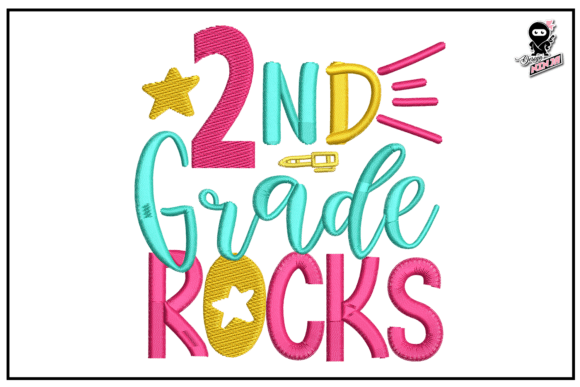
The initial visual mood of 2nd Grade Rocks is exactly what you’d hope for: fun, celebratory, and lighthearted. It feels less like a generic label and more like a decorative accent with personality. This is crucial because the design itself becomes the product’s selling point. It doesn’t just state a grade; it adds a touch of charm, as the description notes. For a crafter or small business owner, that decorative appeal translates directly into visual appeal for your handmade product.
My mind immediately went to its natural fits: a commemorative tote bag for a student, a cozy sweatshirt, a cheerful apron for a teacher, or a baby blanket for a sibling. Its whimsical nature makes it ideal for seasonal handmade gifts and Etsy listings targeting families. For commercial embroidery projects, it could easily be applied to caps, patches, or kitchen towels sold at craft fairs.
Performance in Real Embroidery Projects
Thinking about stitching it onto actual items, several practical considerations come to the forefront. The design’s success hinges on its execution on different surfaces.
Navigating Small Details and Fabric Choices
Many designs with text can stumble on tiny lettering. While I can’t speak to specific stitch counts or hoop size from the provided description, the style suggests attention should be paid to the “Rocks” portion. On curved cap surfaces or stretchy fabric, dense satin stitch areas in letters might require careful stabilizer choice to prevent puckering. For dark fabric, you’d need to plan your thread color contrast carefully—a bright, clean white or a bold color would be essential to maintain the design’s cheerfulness.
Items like pillow covers or nursery decor made from textured fabric would demand a test run. I always test on scrap fabric first, checking for any potential issues with stitch density or layered details pulling on the base material. Furthermore, for products like baby items or kitchen towels that need frequent washing, a robust, clean stitch outline with secure fills is vital for longevity and customer trust.
Enhancing Product Value and Presentation
From a business perspective, using a well-executed design like 2nd Grade Rocks elevates your work. It turns a plain sweatshirt into a personalized gift, increasing its perceived value. Good product photography for your online shop or printable mockup is easier when the embroidered element is crisp and charming. This contributes to brand consistency if you specialize in celebratory or school-themed items, and directly boosts giftability. A customer seeing this on a tote bag design is more likely to engage because the design feels specific and thoughtfully applied, not just generic.
Essential Practical Notes Before You Stitch
Before committing this machine embroidery design to a customer’s order, a professional workflow is non-negotiable.
- Check the Product Details: The brief description doesn’t list specifics. Always confirm the actual hoop size requirements, included file formats for your machine, and the exact license terms on the Creative Fabrica product page before selling finished items. This is the most critical step for any digital embroidery file.
- Prepare for the Stitch: Based on the design’s look, plan your thread colors. Compare light and dark fabric mockups digitally if possible. Select the appropriate stabilizer for your target fabric—no single stabilizer works for everything.
- Inspect the Outcome: After your test stitch, thoroughly inspect small details after stitching. Look for clean jumps, secure fill stitches, and whether any running stitch elements are distinct. This final check ensures the finished product meets a commercial standard.
Is 2nd Grade Rocks Worth Using?
From my point of view as someone who needs reliable design assets, 2nd Grade Rocks presents a strong candidate for specific projects. Its charm is its biggest asset, fitting perfectly into the Back To School niche and beyond for celebratory embroidery. However, its worth is entirely dependent on your due diligence.
It’s not a one-size-fits-all solution. If your project involves very small hoop sizes or delicate, silky fabrics, you must verify its compatibility. But for robust applications on apparel, bags, and home decor where its whimsical accent can shine, it has clear potential to enhance your custom apparel or embroidered patch. It feels designed for real-world use, not just as a digital file. My advice is to see it as a tool: evaluate it against your specific fabric, machine, and product goals. If the details align, it can be a delightful and profitable addition to your creative embroidery toolkit.